
Many people step on the scale hoping for a lower number, but that number alone does not reveal whether you are losing body fat, muscle, or simply water weight. Understanding weight loss vs fat loss can help you focus on real, sustainable health progress instead of temporary scale changes.
If your goal is better shape, improved strength, and long-term wellness, then knowing the difference between weight loss and fat loss is essential.
What Is the Difference Between Weight Loss and Fat Loss?
What Is Weight Loss?
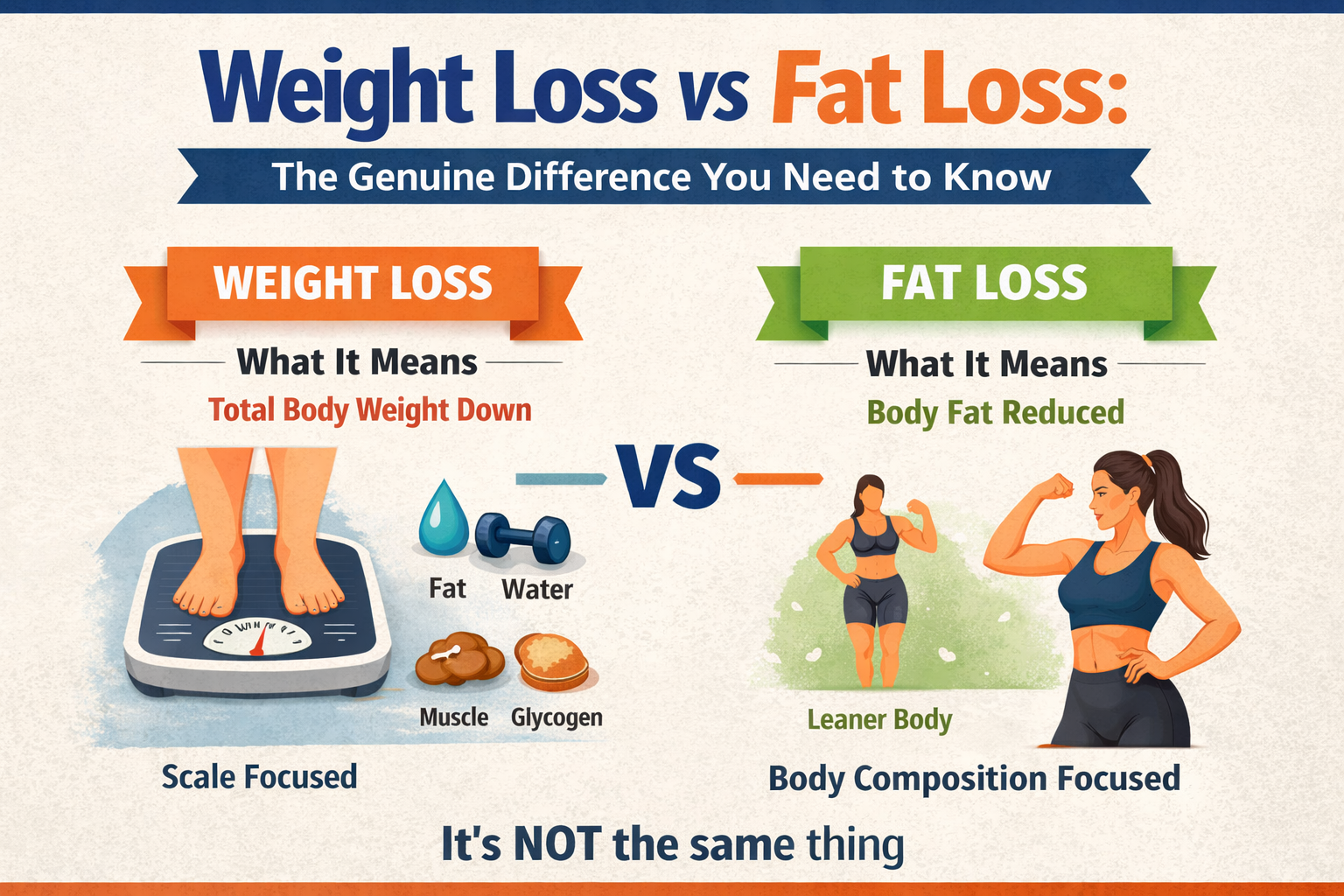
Weight loss means a decrease in your total body weight. That drop can come from:
- fat
- muscle
- water
- glycogen
- even changes in digestion or dehydration
This is why the scale can change quickly from one day to the next. A lower number may look encouraging, but it does not always mean real fat reduction.
What Is Fat Loss?
Fat loss refers specifically to reducing body fat, especially stored fat tissue, while ideally maintaining lean muscle mass. This is the type of progress most people actually want when aiming for a leaner, healthier body.
Unlike general weight loss, fat loss improves body composition, supports metabolism, and helps create a stronger, more toned appearance.
Why the Scale Can Be Misleading
The scale measures everything equally. It cannot tell whether you lost fat, muscle, or water weight.
For example, crash diets often lead to a rapid drop in body weight because the body loses water and stored glycogen first. That can feel like success in the beginning, but it usually does not last.
This is why many people say:
- “My weight went down, but my body looks the same.”
- “I lost kilos, but my belly fat is still there.”
- “I feel weaker even though the scale is lower.”
In many cases, that is weight loss without true fat loss.
Why Fat Loss Matters More for Health
Losing weight without strategy can sometimes lead to:
- muscle loss
- lower energy levels
- slower metabolism
- reduced strength
- poor long-term sustainability
In contrast, healthy fat loss can help:
- reduce visceral fat
- improve body composition
- support metabolic health
- lower the risk of heart disease and type 2 diabetes
- preserve strength and daily function
This is why focusing on fat loss instead of just weight loss often gives better results for both appearance and health.
Weight Loss vs Fat Loss: Quick Comparison
| Aspect | Weight Loss | Fat Loss |
| Meaning | Loss of total body weight | Loss of stored body fat |
| Includes | Fat, muscle, water, glycogen | Primarily fat tissue |
| Speed | Often faster | Usually slower and steadier |
| Result | May not improve body shape | Helps create a leaner body |
| Metabolism | Can slow if muscle is lost | Better preserved with muscle retention |
| Best Measurement | Scale, BMI | Body fat %, waist size, photos, measurements |
| Sustainability | Often temporary if extreme | More sustainable over time |
How to Tell If You Are Losing Fat and Not Just Weight
If you want to track real fat loss progress, do not depend only on the scale. Instead, use a combination of these methods:
1. Track Waist and Body Measurements
Waist, hips, thighs, and arms often reveal progress better than body weight alone.
2. Notice How Your Clothes Fit
Looser clothing can be a strong sign of fat loss, even when the scale barely moves.
3. Take Progress Photos
Visual comparison often shows body composition changes that the scale cannot capture.
4. Check Body Fat Percentage
Smart scales, calipers, or professional scans can give a better picture of fat loss vs muscle loss.
5. Monitor Strength and Energy
If your workouts, stamina, and recovery stay strong, you are more likely preserving muscle while losing fat.
Best Strategies for Healthy Fat Loss
Create a Moderate Calorie Deficit
A small daily calorie deficit is more sustainable than aggressive dieting. This helps encourage fat burning without pushing the body into extreme stress.
Eat More Protein
A higher protein intake helps:
- preserve muscle mass
- control hunger
- improve satiety
- support a toned look during fat loss
Add Strength Training
Resistance training helps protect muscle while your body loses fat. Without it, you may lose weight but look softer or weaker.
Include Cardio Smartly
Cardio can support calorie burn and heart health, but it works best when combined with strength training and a balanced diet.
Prioritize Sleep and Stress Control
Poor sleep and high stress can affect hormones, hunger, and fat storage. Good recovery plays a major role in healthy fat loss.
Common Mistakes to Avoid
Extreme Low-Calorie Diets
These may cause quick weight loss, but they often increase the risk of muscle loss and a slower metabolism.
Too Much Cardio, No Strength Work
This can leave you looking “skinny-fat” instead of lean and strong.
Obsessing Over the Scale
Daily scale fluctuations are normal and do not always reflect real progress.
Expecting Spot Reduction
You cannot reduce fat from only one area like the belly, thighs, or arms. Fat loss happens across the whole body.
Chasing Fast Results
Sustainable fat loss usually takes time. Slow progress is often the kind that lasts.
The Real Goal: Better Body Composition
The real goal is not just to weigh less. The goal is to improve body composition by lowering fat while preserving muscle.
That means:
- better shape
- better strength
- better metabolism
- better long-term health
So instead of asking only, “How much weight did I lose?” ask:
“Am I losing fat in a healthy and sustainable way?”
Mastering fat loss over simple weight loss can transform your fitness journey from short-term frustration into lasting results. Track your progress wisely, eat smart, train with purpose, and focus on what truly changes your body.
Google Featured Snippet
Weight loss means losing total body weight, including fat, muscle, and water. Fat loss means reducing stored body fat while preserving lean muscle. Fat loss is usually healthier and more sustainable because it improves body composition, metabolism, and long-term wellness.
FAQs
1. What is the main difference between weight loss and fat loss?
Weight loss includes fat, muscle, and water, while fat loss specifically means reducing body fat.
2. Can you lose weight without losing fat?
Yes. You can lose water weight or muscle mass without significant fat loss.
3. How can I track real fat loss?
Use waist measurements, progress photos, body fat percentage, clothing fit, and strength levels instead of relying only on the scale.